Tikanga in practice: a guide to culturally confident care
Founded on Māori concepts, views of health, tikanga (Māori values/practices) and Te Tiriti o Waitangi, this resource aims to contribute to providing services and understanding that is responsive to Māori rights/rites, needs and interests.
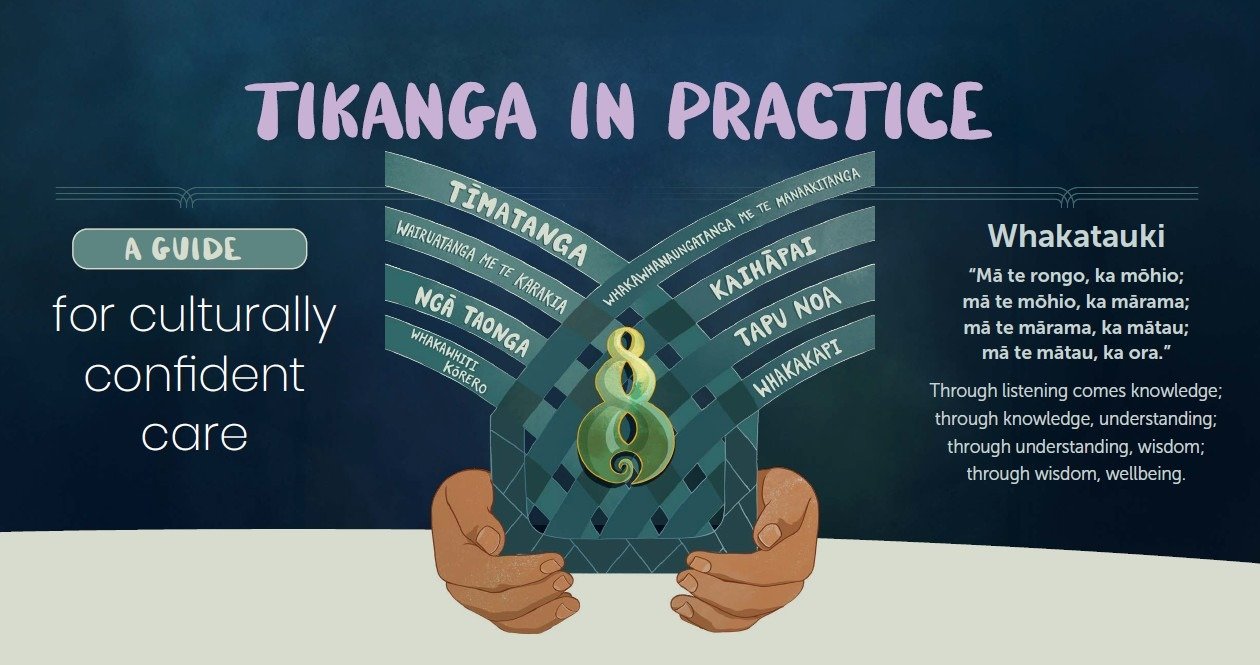
"Mā te rongo, ka mōhio; mā te mōhio, ka mārama; mā te mārama, ka mātau; mā te mātau, ka ora."
Through listening, comes knowledge; through knowledge, comes understanding; through understanding, comes wisdom; through wisdom, comes wellbeing.
Pinnacle is proud to introduce Tikanga in practice, a new resource designed to support culturally confident care across our network. We recognise that practice teams are already doing thoughtful, responsive mahi every day. These tools are an extra layer of support to help embed mana-enhancing behaviours consistently, from the first point of contact at reception through to the clinical consultation.
The resource includes two practical tools: a wall poster for the consult room and a hanging flipbook with team-wide "how-to" guidance. Both have been trialled in-practice with positive feedback, and are designed to help whānau feel culturally safe, welcomed, and understood at every step of their care journey.
Rollout will happen in phases across the network, so we appreciate your patience. To learn more or express interest in participating, please contact tikanga@pinnacle.health.nz or speak with your development manager.
Tīmatanga – Introduction
Generally speaking, tikanga are Māori customary behaviours or practices. The concept is derived from the Māori word ‘tika’ which means ‘right’ or ‘correct’. To act in accordance with tikanga is to behave in a way that is culturally safe or appropriate for Māori people.
The basic principles underpinning these tikanga best practice guidelines are familiar throughout Māori culture. However, different iwi (tribes), hapū (sub-tribes) and marae (Māori community meeting places) may have their own variations.
The tikanga best practice guidelines have been adapted from various sources and Māori knowledge to further support Pinnacle MHN general practices in their endeavours to improve Māori health outcomes.
Founded on Māori concepts, views of health, tikanga (Māori values/practices) and Te Tiriti o Waitangi, this resource aims to contribute to providing services and understanding that is responsive to Māori rights/rites, needs and interests.
This is a guide to best practice, however the advice is not mandatory for every situation.
Most people prefer not to act in ways that are offensive to others, especially when dealing with people in close vicinity. These best practice guidelines have been compiled in an effort to increase awareness of Māori culture within primary care, and to avoid confusion or uncomfortable moments when health professionals may be unsure of what to do.
While focused on Māori in the primary health care setting, the guidelines can be adapted and applied to both secondary health services and/or other ethnicities as they include best practice standards of care suitable for various situations, circumstances, and health environments.
Ultimately, these guidelines are a call to action: to move beyond discomfort, embrace cultural humility, and actively cultivate a healthcare environment where every interaction is an opportunity to build trust, affirm people’s cultural identity, and contribute to a healthcare system where all people feel truly safe and valued.
Mauri ora.