
BlogAdvocacyPractices
6 May 2026
Credibility is built on relationships
Justin Butcher writes about what it actually takes to make progress in rural primary care, and why trust, experience and relationships are at the centre.
Read moreYour general practice team is your first point of contact for health advice or care.
Learn moreSupporting general practices across Te Manawa Taki to deliver sustainable, high-quality care.
Learn moreWho we are, what we stand for, and how we work with general practices across our region. People, purpose, and a genuine commitment to health and wellbeing for all.
Learn moreCall Healthline to talk to a health professional 24 hours a day, 7 days a week, and they will point you in the right direction.
Pinnacle partners with Practice Plus to provide same day virtual after-hours GP appointments for enrolled patients, as an extension of our regular medical centre team.
Call your GP, find a GP or visit Practice Plus for a virtual appointment.
20 April 2022
The development of localities is set to be a fundamental part of New Zealand’s reformed health system.
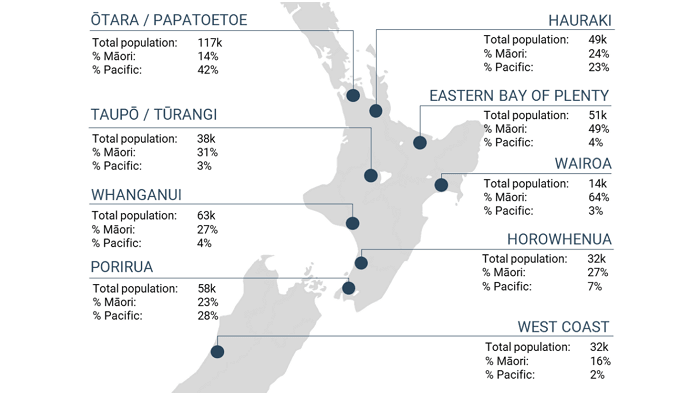
Today Health Minister Andrew Little announced the first nine areas to roll out the locality approach to improving people's health.
We’re excited to share that Tūwharetoa (Taupō-Tūrangi) and Hauraki are among the first communities to be selected. This means the learnings and impacts from this new approach will be strongly experienced within the Pinnacle network.
The locality approach will replace the way things are currently done through district health boards and primary healthcare organisations. It is important to note the people doing this work now will still be involved, but we’ll be working differently.
The positive progress happening in these communities already was a big factor in their selection.
As shown on the map above, there is emphasis on areas with a strong Māori or Pacific population along with a strong focus on rural populations. These are populations where currently services can struggle to deliver on an equitable basis.
A locality is essentially a place-based approach to improving the health of populations, as well as a mechanism for organising health AND social services to meet the needs identified by whānau, community and mana whenua.
There are three characteristics to a locality.
Localities are geographic areas that make sense to the people that live there.
Once the boundary is determined, people and organisations with influence over community health and wellbeing will collaborate on what outcomes they want to see for their community. This will include Iwi-Māori Partnership Boards, and ideally will include health and social care agencies and community organisations, and local government.
A three-year locality plan will be developed in collaboration with the locality partnership, Iwi Māori Partnership Boards, Health New Zealand, and the Māori Health Authority. These locality plans will detail how the goals set for a locality will be achieved.
The plans will drive procurement of services by Health New Zealand and the Māori Health Authority and be the basis for monitoring progress.
Communities and consumers of health services in the locality will be actively involved in identifying priorities and aspirations for services and outcomes.
The first localities will be stood up over April and May 2022 to provide a platform for working through the detail of how the locality approach will operate in practice.
Where localities are being rolled out, they will start to work in different ways and in collaboration with community and social care organisations.
We will see a change in traditional provider roles and service models over time, and the commissioning and development of new roles and services to meet community need. This will have impacts on general practice, and we'll be regularly updating you from what we are learning from our work with Tūwharetoa (Taupō-Tūrangi) and Hauraki localities.
The insights gained from the first localities will also help determine the support arrangements for provider networks.
The roll out of localities will happen over the next two years. New localities are expected to be stood up each quarter so that every area in New Zealand has its own locality by July 2024.
On 1 June 2022, and in areas where localities are yet to be rolled out, primary health organisations will continue to operate through existing arrangements until the new locality approach rolls out.
Pinnacle will be helping general practices in areas not part of initial localities to understand and prepare for the changes that will come.
This locality will follow the tribal boundary of Ngāti Tūwharetoa as mana whenua of this rohe.
This locality aspires to the ‘holy grail’ of health and social care integration, which includes comprehensive primary and community care teams, and will build on existing intersectoral partnerships to co-ordinate services for whānau with complex needs.
Provider networks, comprised of comprehensive community care teams, will work together to plan and deliver care and develop new community models of service delivery. Implicit to their success will be the ability to share clinical data.
The good news is we aren’t starting from scratch and there is considerable collaboration underway that we can leverage - we’ve got COVID-19 to thank for that!
Here are some Q+As that we're sure you are interested in - if you have more please contact Katie Latimer, General Manager, Strategic Development.
The development of this locality is being led by:
Pinnacle, Hauraki PHO and National Hauora Coalition will work together in the roll out. We'll bring your more information as we can.
6 May 2026
Justin Butcher writes about what it actually takes to make progress in rural primary care, and why trust, experience and relationships are at the centre.
Read more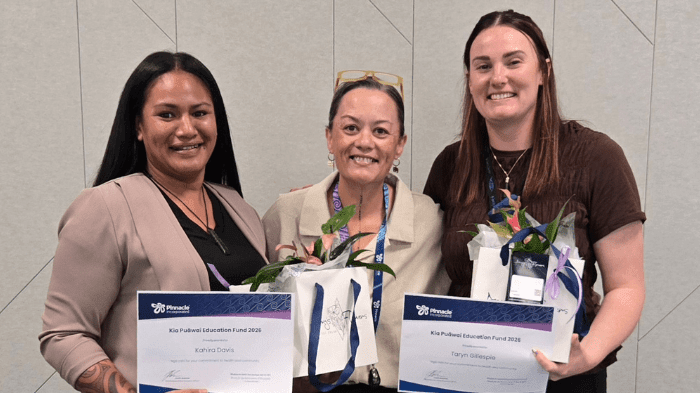
29 April 2026
Investing in Māori and Pasifika health workforce development help address persistent health disparities.
Read more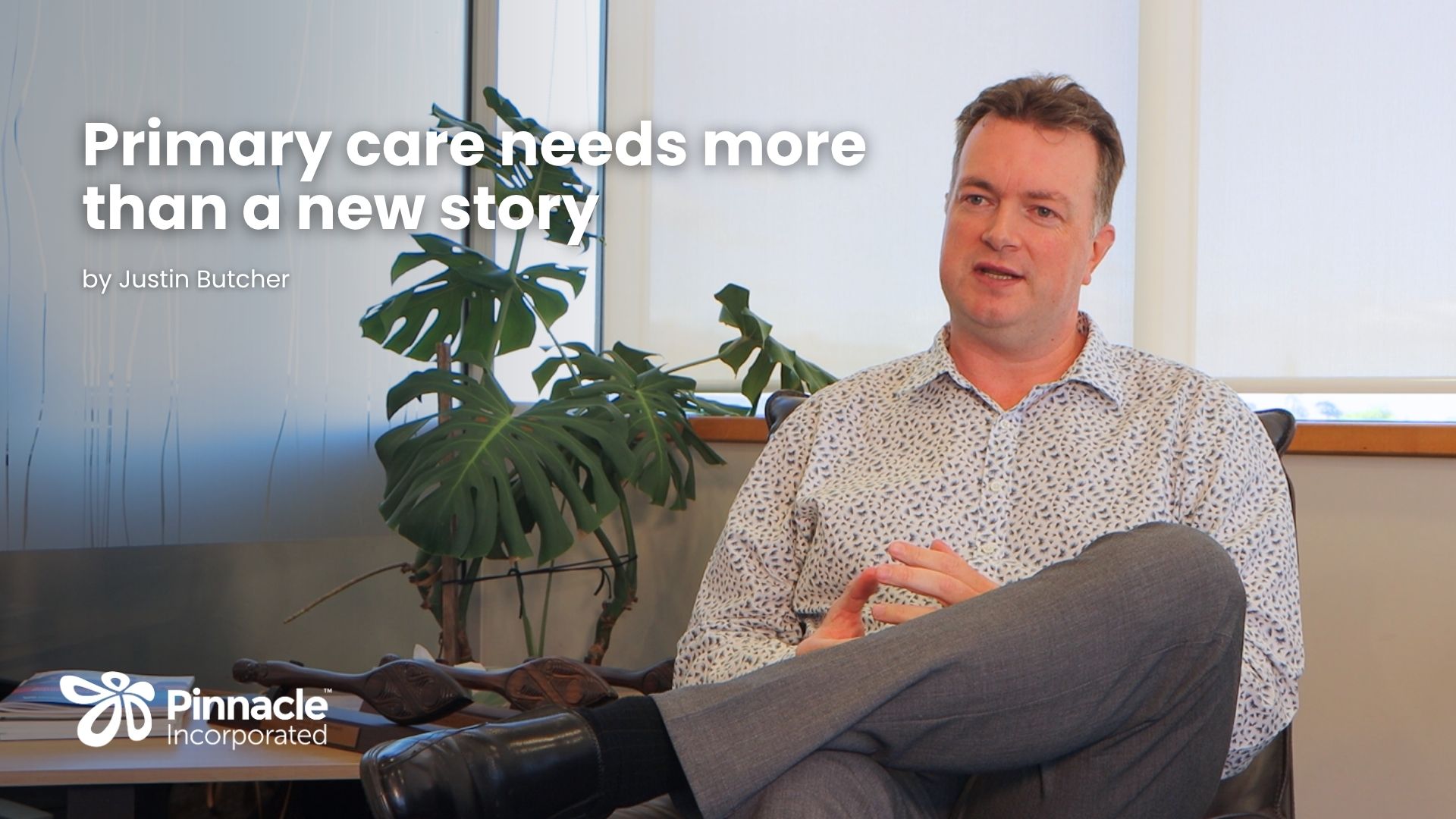
23 April 2026
Fresh thinking, new ideas and challenge can be healthy. But primary care is too important to be reduced to branding, slogans, or simplistic claims.
Read more